
Study in the UK 🇬🇧
Study in UK for discovering world-class education, vibrant student life, and top-ranked universities in the United Kingdom.
Explore UK Universities📘 Study in UK: Your 2025 Journey Starts Here!
Planning to study in UK in 2025? You're not alone. Thousands of students worldwide choose the UK each year for its world-class universities, flexible course options, and strong post-study work opportunities. From scholarships and visa support to part-time jobs and career guidance, the UK offers everything to make your international education dream a success. Follow our expert guide and prepare confidently for your study in UK experience.
🎥 Watch: Life as a Student in the UK

Discover the real experience of studying in the UK—from daily university life to part‑time jobs, culture and more.
- Undergraduate Courses: £10,000 – £20,000 per year
- Postgraduate Courses: £11,000 – £25,000 per year
- MBBS/Medical Degrees: £30,000 – £50,000 per year
- Engineering Courses: £15,000 – £25,000 per year
- Arts & Humanities: £10,000 – £17,000 per year
- Business & Management: £12,000 – £24,000 per year
- Top Universities (Oxford, Cambridge): Up to £40,000 per year
- Scholarships Available: Chevening, GREAT Scholarships, Commonwealth etc.
Tuition Fees in the UK 🇬🇧 (2025)
Studying in UK can be expensive, but planning your tuition fees in advance helps manage your budget better.

- Accommodation (shared flat): £400 – £700/month (outside London), £800 – £1,200/month (in London)
- Food & Groceries: £150 – £250/month
- Transport (student discount pass): £50 – £100/month
- Mobile & Internet: £30 – £50/month
- Books & Study Materials: £30 – £60/month
- Personal Expenses (clothing, hygiene, etc.): £50 – £100/month
- Leisure/Entertainment: £40 – £80/month
- Total Monthly Estimate: £700 – £1,300 depending on location and lifestyle
Cost of Living in the UK 💷 (2025)
When you study in UK, understanding daily living costs is essential for a stress-free student life.

- University of Oxford: Ranked #1 in the UK, world-famous for academic excellence.
- University of Cambridge: Known for tradition, research, and top-tier faculty.
- Imperial College London: Best for Science, Engineering, and Medicine courses.
- University College London (UCL): Diverse programs, global reputation.
- University of Edinburgh: Top choice in Scotland with strong research background.
- King’s College London: Popular for Law, Medicine, and Social Science courses.
- University of Manchester: Affordable and top-rated among international students.
Top Universities in the UK 🎓
Many students choose to study in UK because of its globally ranked universities and academic reputation.

- Work Hours: International students can work up to 20 hours/week during term and full-time during holidays.
- Minimum Wage: £6.40 – £11.44/hour depending on age and job type (2025 rate).
- Common Jobs: Retail assistant, waiter/waitress, barista, delivery rider, library helper, on-campus roles.
- Student Support: Many universities offer part-time job portals and local job fairs.
- National Insurance (NI) Number: Required for legal part-time work – apply after arrival.
- UK Cities with Good Jobs: London, Manchester, Birmingham, Glasgow, Leeds.
- Income Use: Helps cover living expenses, transport, and groceries — not enough for tuition fees.
Part-Time Work Opportunities in the UK 💼
Students who study in UK also benefit from flexible part-time work opportunities to support their living expenses.

- Graduate Route (Post-Study Visa): Allows international students to stay and work in the UK for:
- 2 years after completing Bachelor's or Master's degree
- 3 years after completing PhD
- No Job Offer Required: You can stay and search for a job after graduation.
- Skilled Worker Visa: After finding a qualifying job, you can switch to a Skilled Worker Visa which is a PR pathway.
- ILR (Indefinite Leave to Remain): You may apply for UK PR after 5 years of continuous legal stay (including work visa period).
- Job Sectors for PR: Healthcare, Engineering, IT, Finance, Education are preferred sectors.
- Points-Based System: Points are awarded for job offer, salary level, English proficiency, etc.
- Stay Updated: Always check UK Home Office website for latest PR and visa updates.
PR Pathway & Post-Study Work Options in the UK 🛂
Study in UK not only enhances your academic journey but also opens doors to post-study work options and permanent residency opportunities.

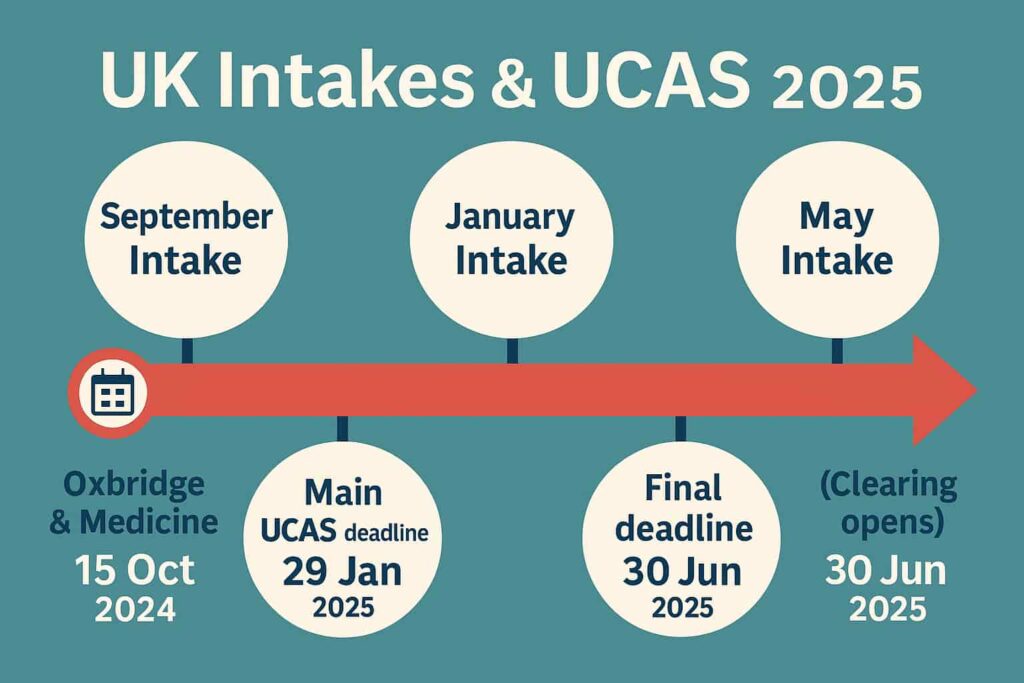
- September/October Intake (Main Intake):
- Most popular and widely available courses
- Application Deadline: January to June (depending on university)
- January/February Intake:
- Limited number of courses and universities
- Application Deadline: September to November
- May Intake (Few Universities):
- Only selected courses offered
- Application Deadline: January to March
- Early Application Tip: Apply at least 6-8 months in advance to secure seats, scholarships, and visa slots.
- UCAS Deadlines: For undergraduate programs, applications are submitted via UCAS; important deadlines start in January.
Intakes & Application Deadlines in the UK 🗓
To study in UK successfully, students must apply on time based on the intake they choose, especially for scholarships and visa preparation.
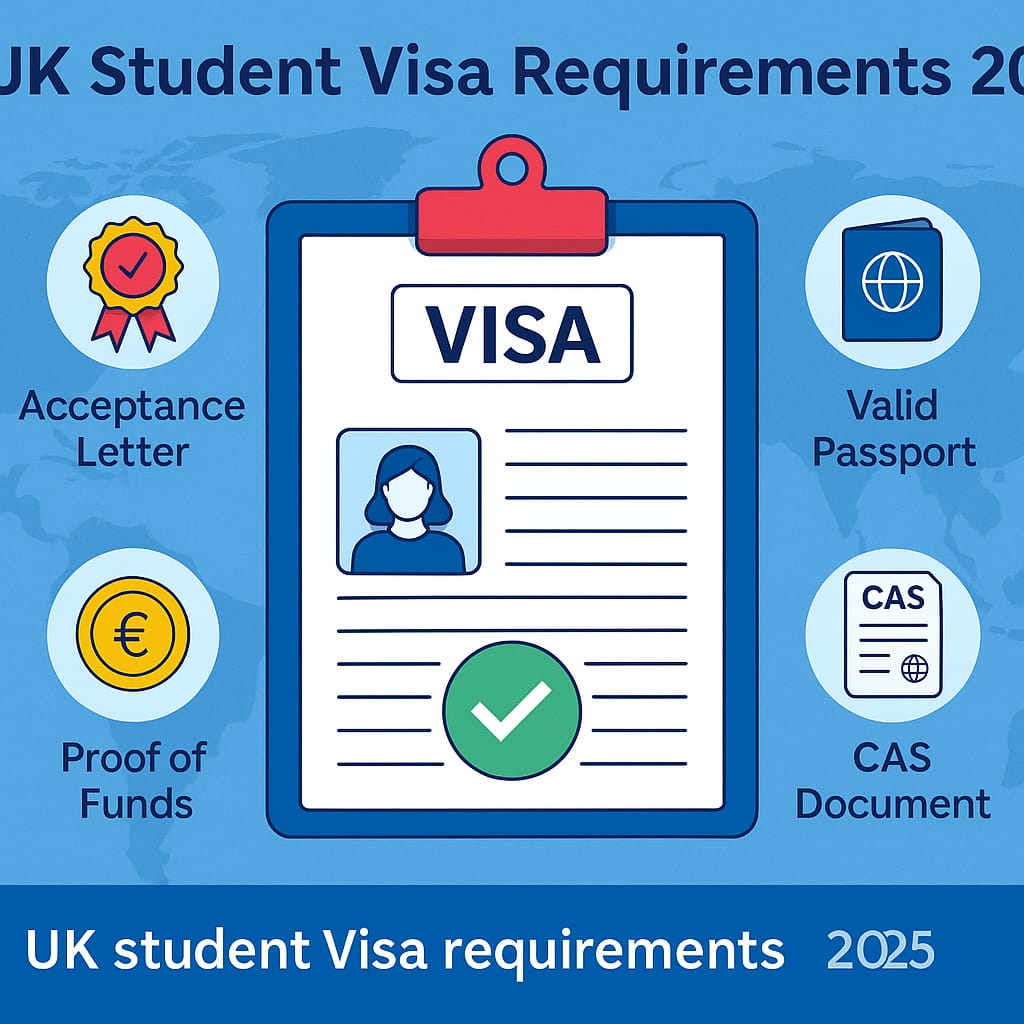
- Confirmation of Acceptance for Studies (CAS): Issued by a licensed UK university after admission.
- Proof of Funds: Show bank statements covering tuition fees + £1,023/month (or £1,334/month in London) for up to 9 months.
- Valid Passport: Must be valid for the entire duration of the course.
- English Proficiency: IELTS, PTE, or TOEFL scores as accepted by your university.
- Passport-sized Photographs: As per UKVI specifications.
- Visa Application Fee: £490 (as of 2025)
- Immigration Health Surcharge (IHS): £776/year (mandatory for NHS access)
- TB Test Report: Required for students from India and many other countries.
- Biometric Information: Fingerprints and photograph at Visa Application Centre.
UK Student Visa Requirements 🛃 (2025)
To study in UK, securing the right student visa is a crucial step that requires proper documents, financial proof, and university acceptance.
- Start Early: Begin your research and university shortlisting at least 12 months in advance.
- Understand Entry Requirements: Each university and course may have specific academic, language, and document prerequisites.
- Research Scholarships: Look for UK government scholarships and university-specific awards ahead of time.
- Prepare Your Documents: Keep your transcripts, passport, SOP, LORs, and English test scores ready and scanned.
- Plan Your Budget: Include tuition fees, living expenses, visa, travel, and unexpected costs in your budget plan.
- Apply for Student Visa Early: After receiving your CAS, apply for a UK student visa without delay.
- Connect with Alumni or Forums: Join student communities to get real-time tips and insights.
- Be Mindful of Deadlines: UK universities are strict with application, offer acceptance, and visa submission timelines.
Top Tips Before You Apply to Study in the UK 📝
Studying in the UK is a rewarding experience, and these smart preparations will make your application journey smoother and more successful.

- Missing Deadlines: UK universities follow strict timelines — don’t wait till the last minute to apply.
- Ignoring Course Modules: Many students apply just by title. Always review the course content before selecting.
- Weak SOPs: A generic or unstructured Statement of Purpose can reduce your chances — customize it for each university.
- Not Preparing for English Tests: IELTS/TOEFL scores are crucial — poor preparation leads to rejection.
- Insufficient Financial Proof: Visa applications are often rejected if funding documents are incomplete or unclear.
- Overlooking Scholarships: Many miss applying for financial aid because they don’t research well in time.
- Late Visa Applications: Students often delay visa application after CAS, risking delays in travel and joining.
- Underestimating Cost of Living: Not planning for real expenses like housing, food, and transport leads to financial stress.
Common Mistakes to Avoid When Applying to UK Universities ⚠
Avoiding these mistakes will give you a better chance at getting accepted, securing funding, and starting your UK journey smoothly.

- Chevening Scholarships: Fully funded scholarship for postgraduate students from over 160 countries including India.
- Commonwealth Scholarships: Funded by the UK government for students from developing Commonwealth nations.
- GREAT Scholarships: Jointly offered by the British Council and UK universities; covers up to £10,000.
- University-specific Scholarships: Most universities offer merit-based or need-based awards (e.g., UCL Global Scholarships).
- India-specific Scholarships: Some UK universities offer exclusive scholarships for Indian students (e.g., Charles Wallace India Trust).
- Tuition Fee Discounts: Early-bird applicants often receive partial fee waivers.
- External Funding: Apply through organizations like Inlaks, Tata Trusts, and Erasmus+ (for specific programs).
- Application Tips: Apply early, keep documents ready, write strong personal statements and get recommendation letters.
Scholarships & Financial Aid in the UK 🎓 (2025)
To study in UK affordably, students should explore scholarships and financial aid options offered by the government and universities.
📘 For detailed financial advice and official updates, visit UKCISA – UK Council for International Student Affairs .

- Diverse Culture: UK welcomes international students from over 100 countries, creating a global learning environment.
- Clubs & Societies: Almost every university offers student clubs – from sports and tech to music, literature, and food!
- On-Campus Facilities: Libraries, gyms, cafes, career centers, and student unions help balance study and social life.
- Public Transport: Reliable bus, train, and tube networks with student discounts in most cities.
- Festivals & Events: Enjoy multicultural events like Diwali, Holi, Chinese New Year, and local British festivals.
- Student Support: Mental health counselors, academic advisors, and career guidance are widely available.
- Safety & Inclusion: UK universities focus on diversity, safety, and anti-discrimination policies.
- Weekend Travel: Explore London, Edinburgh, Lake District, or even nearby countries like France or Ireland!
Student Life in the UK 👨🎓
Student life becomes more exciting when you study in UK, with vibrant campuses, support services, and cultural experiences.

- Globally recognized universities with high academic standards
- Wide variety of courses and specializations
- Post-study work visa through the Graduate Route (2–3 years)
- Shorter course durations (3 years for UG, 1 year for PG)
- Access to rich history, culture, and world-class research
- Student discounts on travel, food, books, and entertainment
- High tuition and living costs, especially in London
- Limited scholarships compared to some other countries
- Weather may feel cold and rainy for Indian students
- PR process is not automatic – requires work visa and time
- Part-time jobs are competitive in major cities
Pros and Cons of Studying in the UK ⚖
✅ Pros
❌ Cons
Before you study in UK, it’s important to weigh the pros and cons to make an informed and confident decision.

What Students Say About Studying in the UK 🗣
“Studying in the UK gave me global exposure and confidence. My professors were supportive, and London life was exciting!”
— Aditi Sharma, MSc at King's College London
“The one-year MBA saved time and money. I also found part-time work easily during my studies in Manchester.”
— Ravi Verma, MBA at University of Manchester
“I received a GREAT Scholarship and studied data science in Edinburgh. The student support and campus facilities were excellent.”
— Meera Kapoor, MSc at University of Edinburgh
Many international students who study in UK share positive experiences about academic life, support systems, and personal growth.

❓ Frequently Asked Questions (FAQs)
What is the cost of studying in the UK?
Tuition fees range from £10,000 to £25,000 per year. Living costs are about £700 to £1,300 per month.
Can I work while studying in the UK?
Yes, international students can work up to 20 hours/week during study and full-time during holidays.
Do I need IELTS or TOEFL?
Most UK universities accept IELTS. Some also accept TOEFL, PTE, or other UKVI-approved English tests.
How early should I apply?
You should apply at least 6–8 months before the intake to ensure timely admission, scholarships, and visa process.
Is PR possible after studying in the UK?
Yes, through the Graduate Route → Skilled Worker Visa → ILR (after 5 years of legal residence).
If you are planning to study in UK, these frequently asked questions can help clarify common doubts about admission, visa, work, and life in the UK.

🎯 Planning to Study in the UK?
Download our FREE “Study Abroad Checklist – 2025” PDF to make sure you don’t miss anything while preparing for your UK journey.
📥 Download Checklist (PDF)This free checklist is specially designed for students who wish to study in UK and need a clear, step-by-step preparation roadmap.

Subscribe for Study in UK Updates
Get important study tips, visa alerts & checklist updates directly in your inbox.
Thank you!
You have successfully joined our subscriber list.

Table of Contents
Toggle